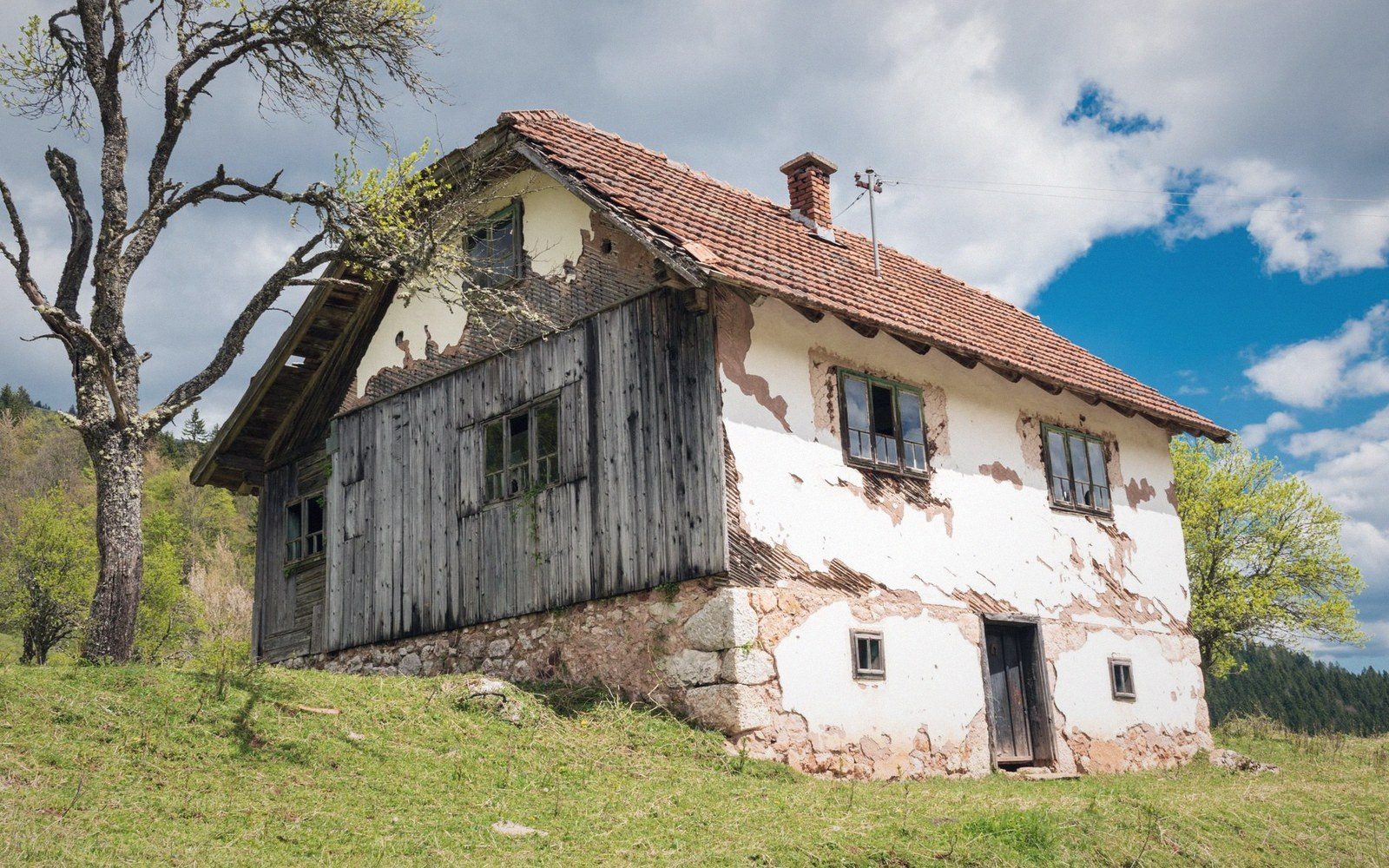
The Houses That Were Built for Summers
Read next: The Map of Where People Went
They stand through the winters empty, and fill briefly each July — a form of investment that is really a form of longing.
A Peculiar Landscape
Drive through almost any village in the Drina valley, the Herzegovinian hills, or the municipalities that ring Sarajevo's outer commuter belt, and the pattern becomes unmistakable: houses far too large for their apparent population, built in stages over a decade or two, often clad in a distinctive render that signals recent money spent on an old plot. These are the diaspora houses — constructed by Bosnians living in Germany, Austria, Switzerland or Sweden, financed incrementally through remittances, and occupied for perhaps four to six weeks each summer.
The phenomenon is not unique to Bosnia, but here it carries particular weight. Remittances are a significant share of household income across large parts of the country, and a substantial portion of that inflow does not circulate through the formal economy in any productive sense. It is absorbed instead into bricks, roof tiles, and poured concrete — assets that feel permanent and rooted, even when their owners are not.
The houses serve a function that economists tend to miss: they are a declaration of ongoing attachment, a spatial claim on a place the owner may never fully return to. Each new storey, each tiled terrace added in the late 1990s or the 2000s, represents a summer's worth of savings redirected from consumption in Düsseldorf or Graz to construction in Foča or Livno. Local builders, suppliers, and ironmongers benefit briefly and visibly. Villages that might otherwise have no investment at all acquire new roofs on old bones.
The costs are subtler. The houses sit empty for ten months of the year, which keeps property markets in certain rural areas artificially inflated relative to local wages — a mismatch that discourages younger residents from buying and can accelerate departure rather than stem it. The capital arrives, the house rises, but the village's permanent population does not grow.
What the diaspora house captures, more honestly than most economic indicators, is the condition of partial belonging: too invested to abandon the place, too settled elsewhere to return.