The Road the Mountains Have Not Given Up
The Sarajevo–Mostar corridor is physically short and politically complicated — a single route that exposes everything wrong with how the country builds.
Two Cities, One Very Difficult Road
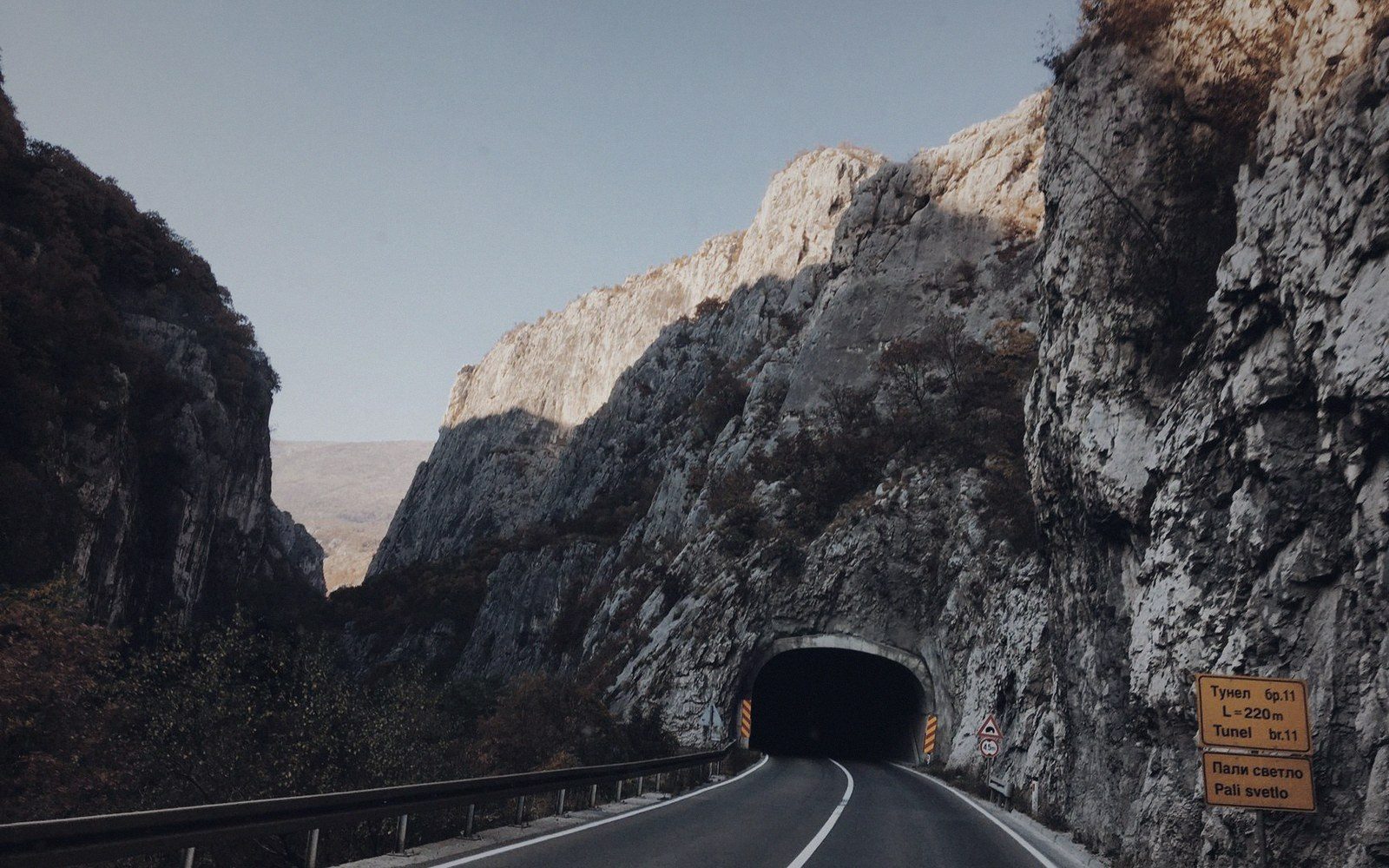
Sarajevo and Mostar sit roughly 75–80 kilometres apart in a straight line (about 125 km by road), but the terrain between them is not straight. The route drops from the Sarajevo basin through the Ivan Sedlo pass, crosses the Neretva canyon system, and descends into Herzegovina — a shift in altitude, climate and geology compressed into a short distance. The road that exists today, the M-17, is partly modernised and partly a two-lane mountain highway where trucks and passenger cars share switchbacks above long drops. Journey times vary from under two hours in summer to considerably longer when the pass closes or ices in winter.
A motorway connection on this axis has been planned, debated and partially funded for decades. The obstacle is not simply money — it is the overlap of funding jurisdictions, entity boundaries and engineering demand. The route passes through the Federation of Bosnia and Herzegovina, and responsibility for road construction sits with the entity-level government and its road agency, JP Autoceste FBiH. But the project also requires coordination with cantonal authorities and, at the state level, with the Ministry of Communications and Transport of Bosnia and Herzegovina, which handles relations with international lenders.
The Ivan Sedlo section — the mountain passage north of Konjic — is the hardest engineering problem. The terrain demands long tunnels, viaducts and slope stabilisation that push costs well above comparable flat-country kilometres. Sections further south, between Mostar and the Adriatic connection at Počitelj and Bijača, have made more progress precisely because the karst terrain there, while challenging, permits more conventional construction.
Financing has come in tranches from the European Investment Bank and the European Bank for Reconstruction and Development, alongside state and entity budget contributions. Each tranche covers a section; sections proceed at different speeds; the result is a corridor that is motorway-grade in places and mountain-road grade in others, sometimes within a few kilometres of each other.
What finishing it requires is a combination of things that are individually achievable but collectively elusive: a sustained funding commitment across multiple budget cycles, entity-level political agreement on route prioritisation, and an engineering procurement process that can attract contractors willing to work in genuinely difficult Alpine terrain. None of those conditions is impossible. None has yet held long enough to bring the full connection to completion.
The Sarajevo–Mostar route is, in that sense, a compressed illustration of how Corridor Vc works as a whole — a project whose logic is nationally obvious but whose execution is hostage to the country's layered authority over everything.