Tuzla's Salt and What Came After
Read next: The South Is Not the North
A mining town's long pivot: how northeastern Bosnia's industrial capital survived the loss of the economy it was built for
From the Ground Up
Tuzla's name is a geographical confession. The word derives from the Turkish tuzla, meaning salt works, and the brine springs beneath what is now northeastern Bosnia's largest city have been exploited for at least two millennia. Roman settlements worked the deposits; medieval Bosnian rulers taxed them; Ottoman administrators formalised the trade. By the time the Austro-Hungarian administration arrived in the late nineteenth century and began applying industrial logic to the extraction, Tuzla already had a mono-resource identity that would define it — and eventually constrain it — for generations.
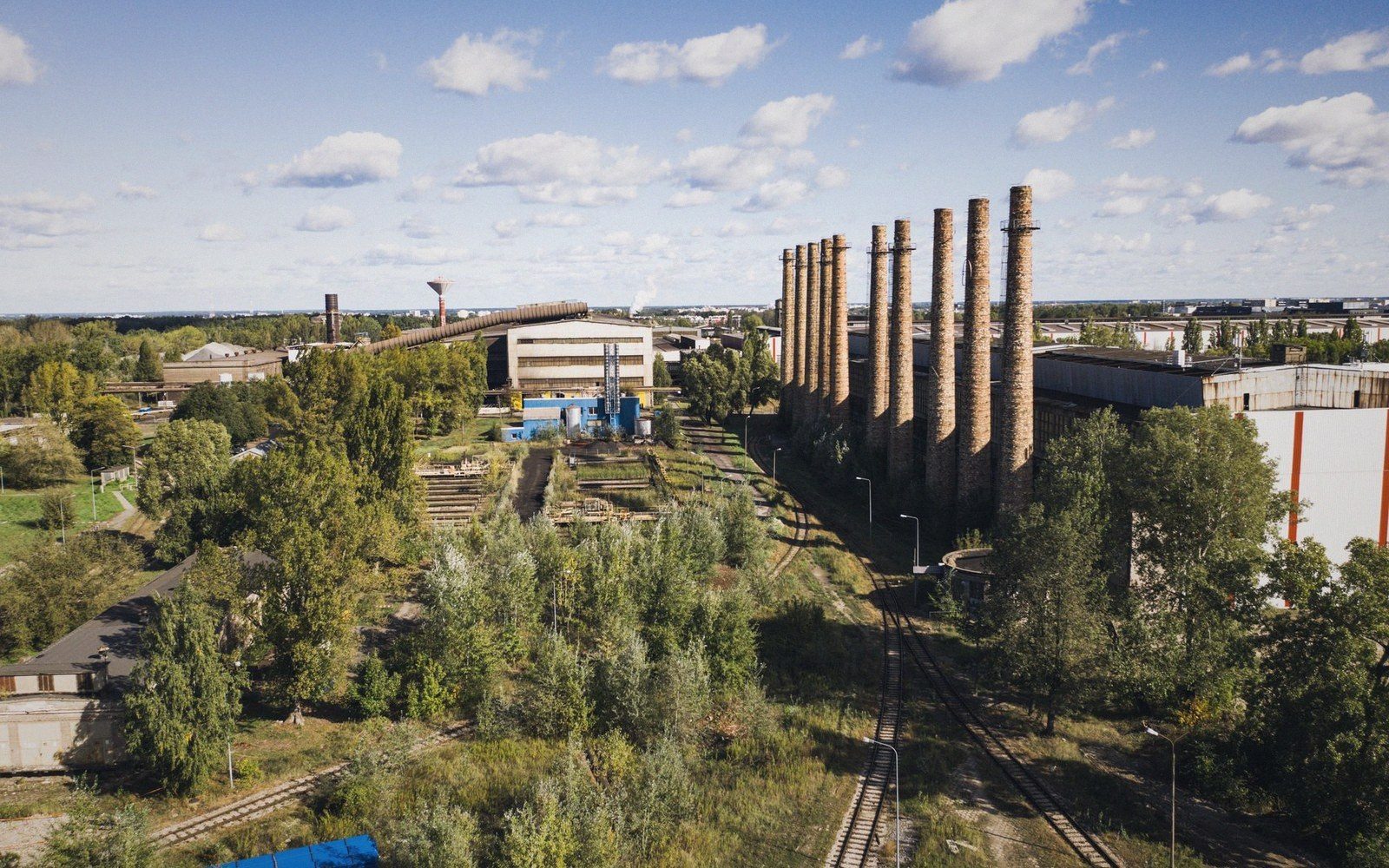
Salt brought chemicals. The proximity of cheap brine made Tuzla a natural location for a soda-ash plant, which the Austro-Hungarians established and the Yugoslav period vastly expanded. Sodium carbonate production anchored a wider petrochemical cluster that ran through the socialist decades, drawing workers from across northeastern Bosnia and sustaining a labour aristocracy of industrial employees who enjoyed the subsidies, housing and social amenities the Yugoslav system offered its factory towns. Coal from the nearby Kreka mine and Đurđevik field fed thermal power generation; power fed the factories; the factories employed the workers; the workers populated the city. The logic was circular and, for a long time, it held.
What the 1990s Broke
The war of 1992–95 did not destroy Tuzla's industry the way bombardment destroyed other cities' infrastructure. Tuzla, whose local political culture had been notably resistant to ethnic nationalism before and during the war, remained under the control of the Bosnian government throughout the conflict, though it was shelled at times, and was not subjected to the same sustained physical devastation visited on cities on or near frontlines. What the war did destroy was the supply chain and the market. The Solana salt company and the Sisecam-linked soda-ash operation — the two anchors of the industrial economy — lost access to Yugoslav-era distribution networks overnight. The federal market that had absorbed their output ceased to exist. Workers were paid irregularly or not at all; enterprises ran on inertia and political will rather than commercial logic.
Post-war restructuring compounded the rupture. Privatisation in the late 1990s and 2000s, conducted under the Federation of Bosnia and Herzegovina's legal framework, produced mixed results across the country but was particularly damaging to large legacy manufacturers in Tuzla. Several plants changed ownership without attracting genuine investment; asset-stripping was documented in a number of cases. The soda-ash plant passed through various ownership arrangements before a Turkish conglomerate, Şişecam, acquired a controlling stake and stabilised production — the most significant piece of genuine foreign investment in the city's post-war industrial story. Salt extraction itself continued at reduced scale under the Solana Tuzla enterprise.
What did not recover, and has not since, is the employment mass those industries once represented. A factory that employed several thousand people in 1985 might employ a few hundred today, if it operates at all. The gap this created was never fully filled.
What Came After
Tuzla's economic adaptation since the mid-2000s follows a pattern recognisable in deindustrialised towns elsewhere in Central and Eastern Europe, with local variations. The city's university, established in 1976 and expanded significantly after the war, has become a genuine economic anchor — a source of employment, a supplier of mid-skilled labour to service sectors, and increasingly a reason younger people from the wider Tuzla Canton stay, or try to. The canton administration is itself a significant employer, as the public sector is across the country.
Small and medium manufacturing has filled some of the void — furniture, food processing, light engineering — typically operating at a scale that makes no single employer dominant and produces no dramatic headline but adds up to something. A logistics and distribution function has grown around Tuzla's position on road corridors linking Sarajevo with the north and the Croatian border. The airport, one of a small number of functioning commercial airports in the country, handles budget-carrier traffic that connects the Tuzla diaspora — substantial in Germany, Austria and Scandinavia — to the region.
Tuzla also presents a cautionary note about urban subsidence. Decades of brine extraction left cavities beneath parts of the city, and visible ground settlement in several central neighbourhoods is a documented consequence of the industry that built the place. The city has spent years managing, monitoring and in some areas remedying the damage. It is an unusually literal illustration of what a resource economy leaves behind: not just closed factories and retraining programmes, but the physical mark of extraction in the earth underfoot.